Online batch
Live classes from anywhere in India
- Starts
- Saturday, 10 Oct 2026
- Days
- Tuesday, Thursday, Saturday
- Time
- 9:00 PM to 10:00 PM IST
- Language
- Mainly English, with Hindi or Marathi when needed
- You need
- A laptop and stable internet
A live Python logic-building batch for students of any stream. We start from zero and train you to solve the programming questions companies ask in coding rounds and technical interviews.
First batch starts Saturday, 10 October 2026.
Dry run, one loop at a time
| temp | digit | rev |
|---|---|---|
| 121 | 1 | 1 |
| 12 | 2 | 12 |
| 1 | 1 | 121 |
| 0 | – | loop ends |
rev (121) == n (121) → True
This is how you'll learn to think: trace every step on paper before you type. Once you can dry-run a problem, you can solve it.
Most students we meet have watched tutorials. Then the coding round starts and this happens:
You read the question, understand it, and still don't know where to begin.
Your code works for the sample input and fails the hidden test cases.
The interviewer asks you to explain your approach, and you go blank.
That's a logic gap, not a talent gap. This batch closes it through daily problem solving, dry runs, and timed practice tests that feel like the real thing, so the actual round feels familiar.
If you're a student and you want to clear programming questions in interviews, you can join. First-year students get a head start. Final-year students get focused preparation for the season they're in.
Same syllabus, same mentors, same fee. Choose the one that fits your college timetable.
Live classes from anywhere in India
In-person classes at our Shaniwar Peth centre
The offline batch has longer sessions, so you get extra supervised practice time in class. Bring your own laptop.
Every module ends with problems asked in real fresher interviews. You solve them in class, then on your own, then under a timer. Tap a module to see what's inside.
Breaking a problem into steps, flowcharts, pseudo-code and the dry-run method. Installing Python, variables, data types, input and output, operators, type conversion.
Practice: swap two numbers without a third variable, simple interest, temperature conversion, area and perimeter problems.
if, elif, else, nested conditions, logical operators, and how to test every edge case before you submit.
Practice: even or odd, leap year, largest of three numbers, grade calculator, triangle type, electricity bill.
for and while loops, range, break, continue, nested loops. The digit-extraction technique that unlocks dozens of interview questions.
Practice: reverse a number, sum of digits, palindrome, Armstrong, prime and primes in a range, perfect and strong numbers, factorial, Fibonacci, GCD and LCM, decimal to binary.
The row-and-column method that lets you build any pattern instead of memorising them. Star, number and alphabet patterns.
Practice: right triangles, pyramids, inverted and hollow shapes, diamond, Floyd's triangle, Pascal's triangle.
Indexing, slicing, immutability, built-in methods, formatting. Solving each problem both with and without built-ins, because interviewers often ask for the manual way.
Practice: reverse a string and its words, palindrome, anagram, vowel and consonant count, character frequency, first non-repeating character, remove duplicates, toggle case, string compression.
List operations, traversal, nested lists and matrices. Linear and binary search, bubble, selection and insertion sort. A first look at time complexity: how to move from a brute-force answer to a better one and explain why.
Practice: largest and second largest, rotate a list, remove duplicates, find the missing number, move zeros to the end, pair with a given sum, merge two sorted lists, matrix addition and transpose.
Counting with dictionaries, set operations, packing and unpacking, and choosing the right collection for the problem.
Practice: word frequency, find duplicates, common elements in two lists, most frequent element, group anagrams.
Parameters, default and keyword arguments, scope, return values. Recursion traced on paper so it finally makes sense. lambda, map, filter and comprehensions.
Practice: recursive factorial, Fibonacci, power, sum of digits, reverse a string, palindrome check, Tower of Hanoi.
Classes and objects, constructors, instance, class and static methods. Encapsulation, inheritance, polymorphism and abstraction with examples you can explain in an interview. Method overriding and dunder methods.
Practice: bank account, student record system, library system, plus the OOP theory questions interviewers ask most often.
Reading, writing and appending files, the with statement, working with folders. try, except, else, finally, raising errors and custom exceptions, so your programs don't crash on bad input.
Practice: count lines and words in a file, copy a file, build a marks report from a file, safe number input.
Meta-characters, quantifiers, character classes, match, search, findall and sub.
Practice: validate mobile numbers, email IDs, PAN, Aadhaar and password strength; extract data from text.
Full-length timed practice tests, predict-the-output and find-the-bug questions, and practice explaining your approach out loud. We revise the question patterns that appear again and again in fresher interviews.
Logic only improves when you solve problems yourself. Every week follows the same routine.
A concept, taught with a dry run on the board.
Interview problems solved live, with your doubts answered.
A problem set after every class, graded from easy to tricky.
A timed test on the week's topics, then a review of the solutions.
If you attend and practise, your logical thinking will improve. You'll be able to break down a new programming question, write a working solution and explain it clearly. That's the skill coding rounds and technical interviews test.
We don't guarantee a job or an internship. Nobody honestly can. We train the skill; you bring the practice.
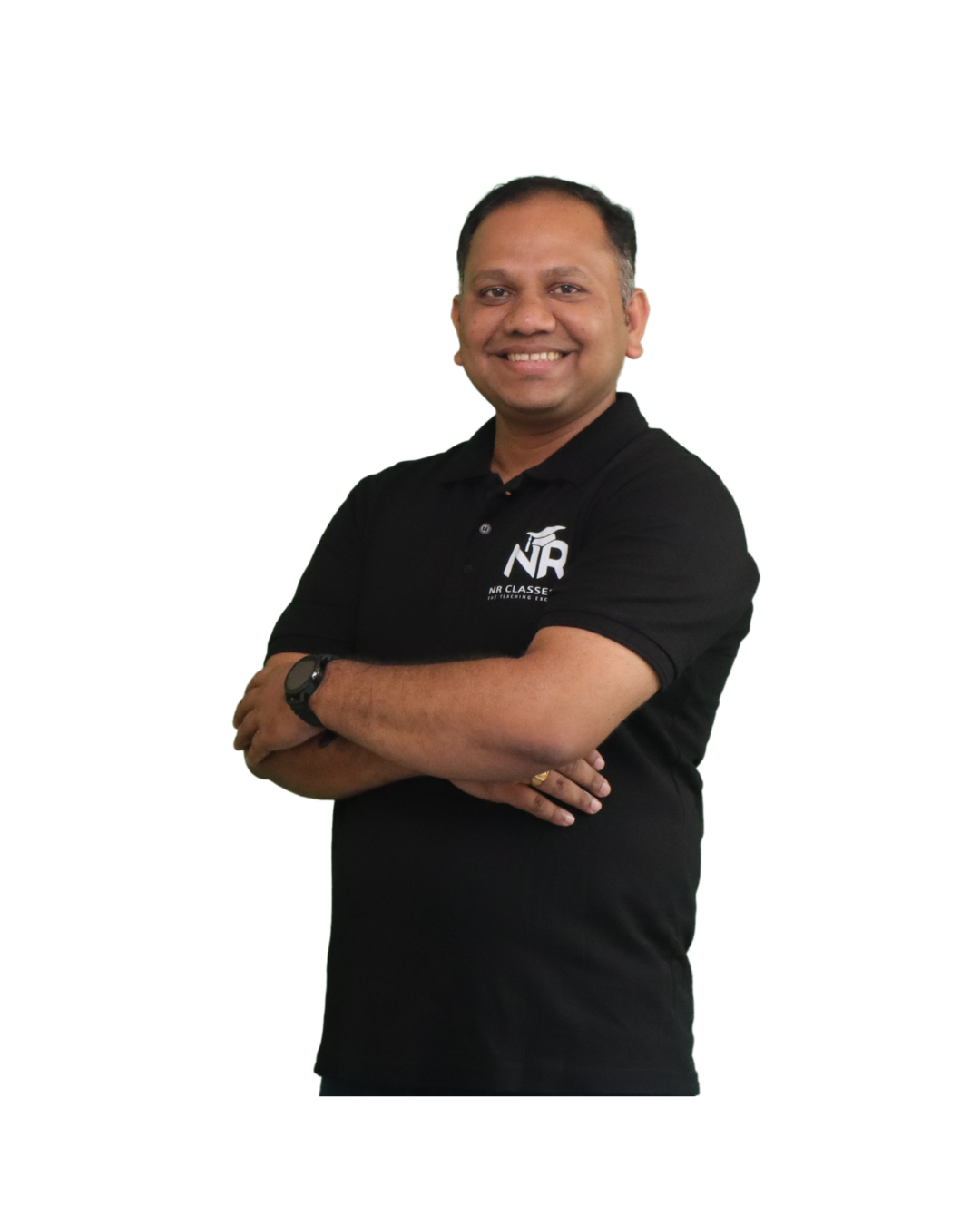
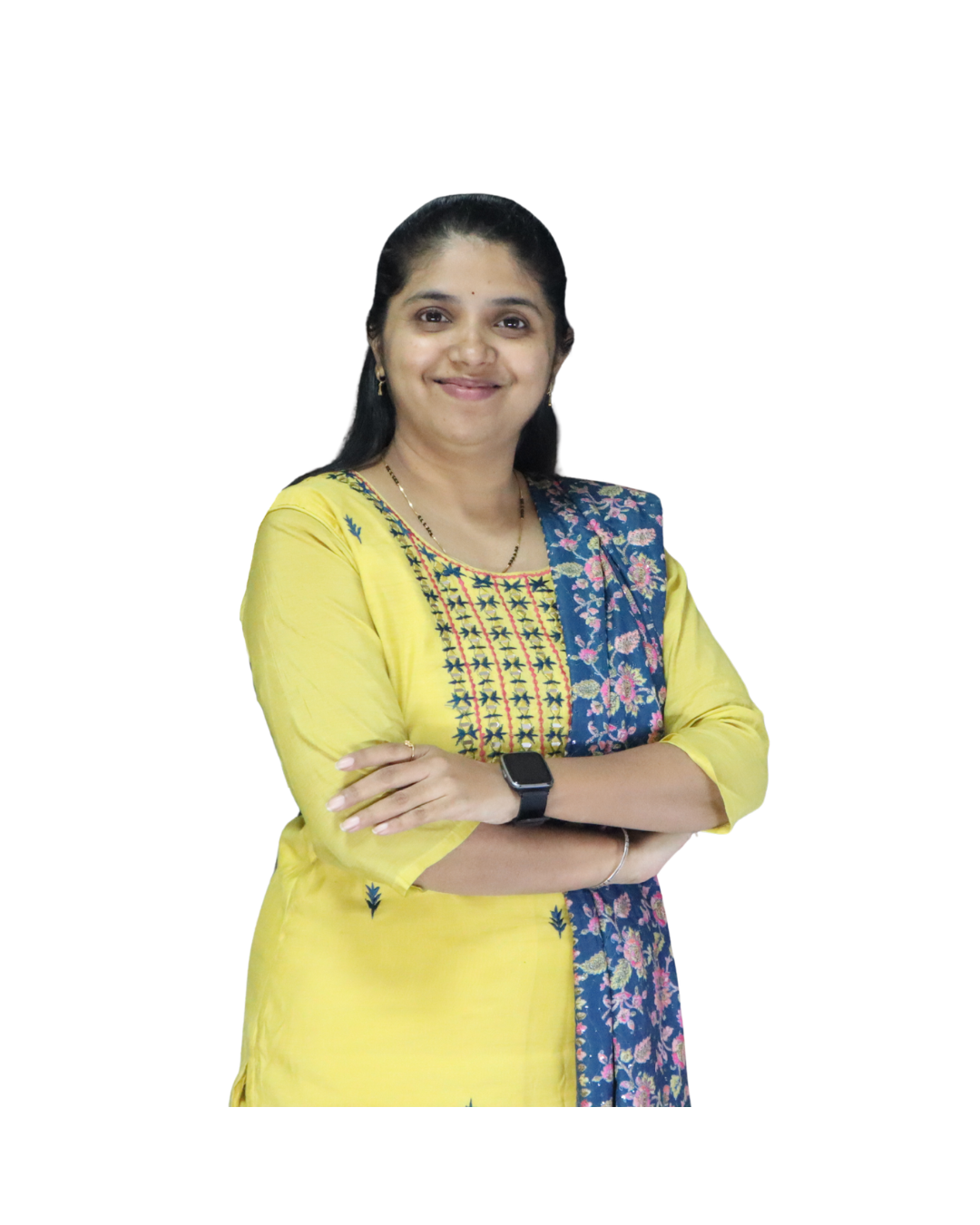
Two teachers with 14+ years each in the classroom. Both work with both batches.
Founder, Logic Overflow. Co-founder, NR Classes
"If you understand logic, every language is just syntax."
Ramdas Sir has taught programming for over 14+ years and has trained more than 5,000 students. He's known for teaching the why behind every line of code, which is why his logic-building videos reach a large student community on Instagram @logic_overflow. He'll lead both batches from the first class to the last.
Doubt sessions and student support
Neha Ma'am brings 14+ years of teaching with a strong base in mathematics and statistics, which makes her especially good at the number-logic problems students find hardest. She runs doubt-solving sessions and supports students throughout the batch.
Logic Overflow is the logic-first training programme of NR Classes LLP, Pune. Our belief is simple: learn to think first, and every language becomes easier. We teach in class in Pune, live online, and through free videos that thousands of students watch every month.
Yes. This batch is open to students of every stream: engineering of any branch, BCA, BSc, BCom, BBA, diploma and more. Many service companies hire from all streams and test the same programming logic, so this is exactly where to start.
Yes. We start from installing Python and writing your first line. No prior knowledge is assumed. What we do need from you is regular practice after class.
It's the best time. Logic takes time to build, and starting early means you'll be comfortable well before your placement season, not rushing during it.
Sessions are recorded, so you can catch up. Try to attend live when you can, because solving problems together and asking doubts is where most of the learning happens.
No course can honestly guarantee that, and we won't. What we promise is stronger logic: you'll be much better prepared to solve the programming questions asked in coding rounds and technical interviews.
A laptop with at least 4 GB RAM. For online classes you also need stable internet and a quiet place to study. Offline students bring their laptop to the Pune centre. We share a setup guide after registration.
Please choose carefully, because each batch has only 25 seats. If seats are free in the other batch and your reason is genuine, we'll try to help, but we can't guarantee a switch.
Tap a pay button for your batch. You'll go to a secure Razorpay page to enter your details and pay ₹7,999. After payment you get a confirmation email, and we WhatsApp you the joining details within 24 hours.
WhatsApp us at +91 97303 81255. We usually reply within a few hours.
25 seats in each batch. Pay once, ₹7,999, and your seat is confirmed.
Starts Sat, 10 Oct. Tuesday, Thursday and Saturday, 9 to 10 PM IST.
25 seats
Pay ₹7,999 for OnlineStarts Sun, 11 Oct. Thursday 5:30 to 7:30 PM and Sunday 9 AM to 12 PM.
25 seats
Pay ₹7,999 for OfflineSecure payment through Razorpay. Confirmation email right after payment. Joining details on WhatsApp within 24 hours.